

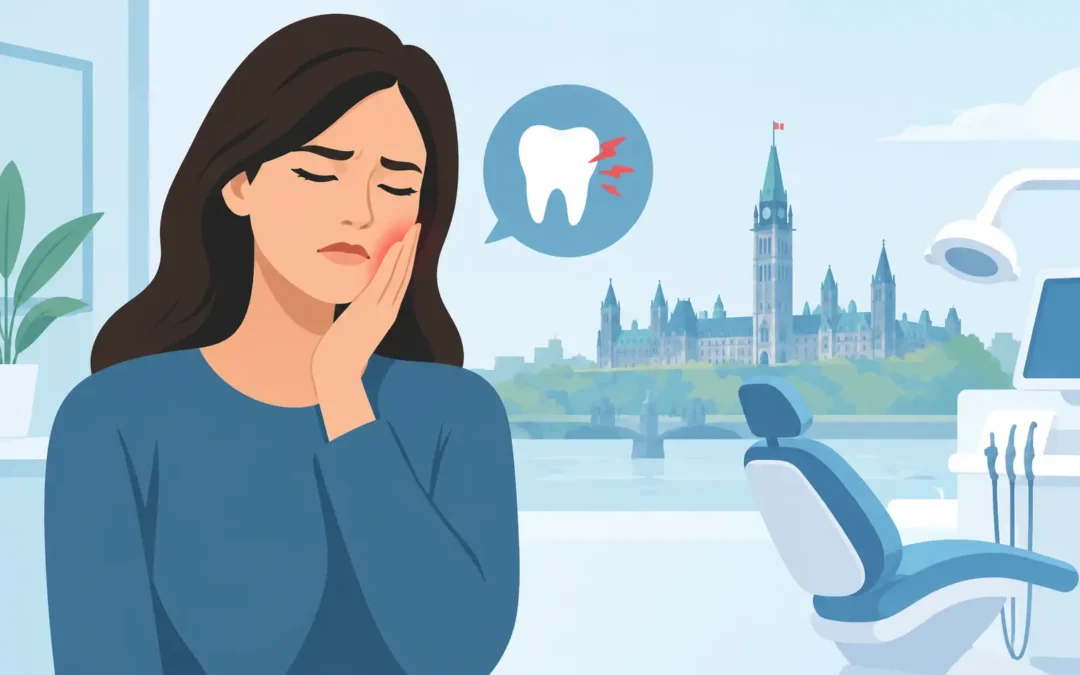
A cracked tooth during dinner, a sudden throbbing ache at midnight, or a child’s knocked-out tooth after practice can make it hard to think clearly. When you need an emergency dentist Ottawa patients can reach for prompt, calm care, the first goal is simple: relieve discomfort, protect the tooth, and get the right help without delay.
Not every dental problem requires treatment within the hour, but pain, swelling, trauma, and a damaged restoration should never be ignored. Acting early can often mean a simpler treatment, better comfort, and a stronger chance of saving your natural tooth.
What Counts as a Dental Emergency?
A dental emergency is any concern involving severe pain, infection, injury, or bleeding that will not stop. It can also include a lost filling or crown when the tooth is painful, sharp, or exposed to temperature.
Some situations need immediate medical help rather than a dental appointment. Call 911 or go to the nearest emergency department if swelling is affecting breathing or swallowing, if bleeding will not stop, or if a jaw injury may be fractured. Facial swelling that is spreading quickly, especially with fever or difficulty opening your mouth, also needs urgent assessment.
For most other urgent dental concerns, calling a dental office as soon as possible is the right next step. Explain what happened, when it started, whether you have swelling or fever, and what level of pain you are experiencing. Those details help the team prioritize your care and prepare for the treatment you may need.
Emergency Dentist Ottawa Care for Common Problems
Severe toothache or lingering sensitivity
A toothache can come from a deep cavity, a cracked tooth, gum infection, a failing filling, or an abscess. Pain that keeps you awake, worsens when you bite, or lingers after hot or cold foods deserves prompt attention.
Rinse gently with warm water and floss carefully around the sore tooth in case food is trapped. A cold compress on the outside of the cheek may help with discomfort or swelling. Over-the-counter pain medicine may also help when taken as directed on the label and when appropriate for your health history. Do not place aspirin, alcohol, or pain-relief gels directly on the gums or tooth, as they can irritate and burn soft tissue.
Pain can ease temporarily while the underlying problem remains. A dental exam and X-rays, sometimes including 3D CBCT imaging for more complex cases, allow the dentist to identify whether the tooth needs a filling, crown, root canal treatment, or another approach.
A knocked-out or loosened tooth
A permanent tooth that has been completely knocked out is time-sensitive. Pick it up by the crown, which is the chewing surface, rather than the root. If it is dirty, rinse it briefly with milk or saline solution. Do not scrub the root or remove attached tissue.
If you can place the tooth gently back into its socket, do so and bite softly on clean gauze to keep it in place. If that is not possible, keep the tooth moist in milk or inside your cheek if you can do so safely. Contact a dentist immediately. The sooner a permanent tooth is repositioned, the better the outlook can be.
Baby teeth are different. Do not try to put a knocked-out baby tooth back into the socket, as this can harm the developing adult tooth. Call for guidance and have your child assessed.
A chipped, cracked, or broken tooth
A small chip may not be urgent, but a visible crack, broken cusp, sharp edge, or tooth with pain should be seen promptly. Rinse with warm water, save any pieces you can find, and cover a sharp edge with dental wax if available. Avoid chewing on that side until you are assessed.
The right repair depends on how deep the damage goes. Minor chips may be smoothed or repaired with bonding. Larger fractures may require a crown to protect the tooth. When the nerve has been exposed or infected, root canal therapy followed by a crown may be the most reliable way to preserve it.
Lost filling, crown, bridge, or veneer
A lost restoration can leave a tooth sensitive and vulnerable to further breakage. Keep the crown, bridge, or veneer if you find it, and bring it with you. Avoid sticky foods and do not chew on the exposed tooth.
Temporary dental cement from a pharmacy may sometimes help hold a crown in place until your appointment. Do not use household glue. It can damage the restoration, irritate your mouth, and make a proper repair more difficult. A dentist will determine whether the restoration can be recemented or whether the tooth and restoration need further treatment.
Swelling, a gum abscess, or a bad taste
A pimple-like bump on the gums, swelling near a tooth, drainage, or a persistent bad taste may signal infection. Even if pressure suddenly decreases after drainage, the infection has not necessarily resolved. Dental treatment is needed to address the source, which may involve drainage, root canal treatment, or extraction depending on the condition of the tooth.
Antibiotics are not always the complete answer for a dental infection. They may be prescribed in certain situations, but treatment of the affected tooth is what removes the source of infection. Do not wait for swelling to become severe.
What to Expect at an Urgent Dental Visit
An emergency appointment should begin with listening. Your dental team will ask about your symptoms, health history, medications, allergies, and the events leading up to the problem. A focused exam and imaging help locate the cause, not just the painful area.
The immediate priority may be to get you comfortable, control infection, stabilize a broken tooth, or address trauma. Sometimes definitive treatment can be completed the same day. In other cases, a temporary restoration, medication, or protective step is the safest first phase, followed by a return visit for a crown, root canal, implant planning, or another long-term solution.
This is where having broad care available in one office can make a real difference. A practice equipped for restorative treatment, extractions, root canal therapy, sedation-supported procedures, and advanced imaging can often coordinate care without sending a patient from office to office during an already stressful situation.
How to Prepare Before You Call
If possible, have a brief description ready: when symptoms began, whether pain is constant or only occurs with biting, whether there is swelling or fever, and whether you experienced a fall or direct injury. Bring your insurance information and a list of current medications. If you have a broken restoration or tooth fragment, keep it in a clean container.
For families using the Canadian Dental Care Plan, newcomers, and patients who are worried about costs, asking about coverage and treatment options early can make decisions feel more manageable. The right care plan should explain what must be done now, what can safely wait, and the likely costs before treatment proceeds whenever the situation allows.
When After-Hours Care Matters
Dental pain does not follow business hours. Evening and Saturday availability can be especially helpful for working professionals, parents managing school schedules, and patients who develop symptoms outside a typical weekday appointment. Still, timing depends on the issue. A painless lost filling may be able to wait briefly, while facial swelling or a knocked-out permanent tooth should be addressed right away.
At Dr. Jordan Pettigrew & Associates, the team provides same-day emergency care with a focus on clear explanations, comfort, and practical next steps for Ottawa families, including patients from Westboro, the west end, Aylmer, and Gatineau.
If something feels wrong in your mouth, trust that instinct. A timely call can turn a frightening dental problem into a clear plan for relief and recovery. If you cannot reach Dr. Pettigrew and Associates for your dental emergency- Ottawa has an incredible dental Emergency service- their contact info is 613-523-4185- there is a Dentist on call from 9-9 everyday of the week.